

You know the feeling. A new customer walks into your shop, visits your website, or slides into your Instagram DMs. They ask questions, you serve them well, they make a purchase, and you celebrate the win.
But then… silence. Weeks turn into months, and they never buy from you again.
In Kenya’s vibrant business landscape, it is easy to fall into the “acquisition trap”, spending all your energy, airtime, and sponsored ad budget looking for new customers. But here is the hard truth: getting a customer to buy once means you have a great marketing strategy; getting them to buy twice means you have a great business.
If your data (or your M-Pesa till statement) shows a high number of one-time buyers, you have a repeat purchase gap. Let’s look at why this happens and how to fix the trust leak.
The Root Cause: The Repeat Purchase Gap
The repeat purchase gap is the distance between what a customer expected to happen when they paid you, and how they actually felt after the transaction was over.
When a Kenyan consumer tries a new SME, they are taking a risk. They are risking their hard-earned money in a market where being let down by a business is a familiar story. If you do not actively bridge that gap after the first sale, they will slip away to a competitor.
Here are the biggest reasons Kenyan SMEs lose customers after the first purchase:
1. The “Post-M-Pesa” Cold Shoulder
We have all experienced this. Before the payment, the business responds to WhatsApp messages within two minutes. The energy is high. But the moment the M-Pesa confirmation message hits? Silence. Delivery gets delayed, or the product arrives without a simple “Thank you.”
- The Trust Leak: When communication drops after payment, the customer feels used. Trust is built in how you treat them after you have their money.
2. The Silent Ghosting (Why Complaints Rarely Reach You)
Here’s something that trips up business owners everywhere, not just in Kenya: when a customer is unhappy, they almost never tell you. They just leave. Research on this is stark — studies suggest only 1 in 26 dissatisfied customers ever voice a complaint. The other 25 quietly walk away, and most businesses never find out why.
What makes this worth watching closely in the Kenyan market is that indirect communication and conflict-avoidance are recognized features of how business relationships often work here, a 2024 study on Nairobi MSMEs specifically pointed to high-context communication norms shaping how local businesses interact. So if the global pattern is “customers rarely complain,” it’s reasonable to expect that pattern to be even more pronounced in a market where saying “the food was cold” to someone’s face isn’t the natural move. If the food was cold, the dress was poorly stitched, or the customer service was slow, the more likely outcome is a polite “Asante,” a smile, and a customer you never see again.
- The Trust Leak: You assume everything is fine because no one is complaining, while your customer base is quietly shrinking. You cannot fix a problem you don’t know exists.
3. Out of Sight, Out of Mind
Even if a customer liked your product, life happens. Traffic is hectic, work is demanding, and there are a million other brands shouting for attention. If you don’t remind them that you exist, they will simply forget you when they need to buy again.
Turning One-Time Buyers into Raving Fans
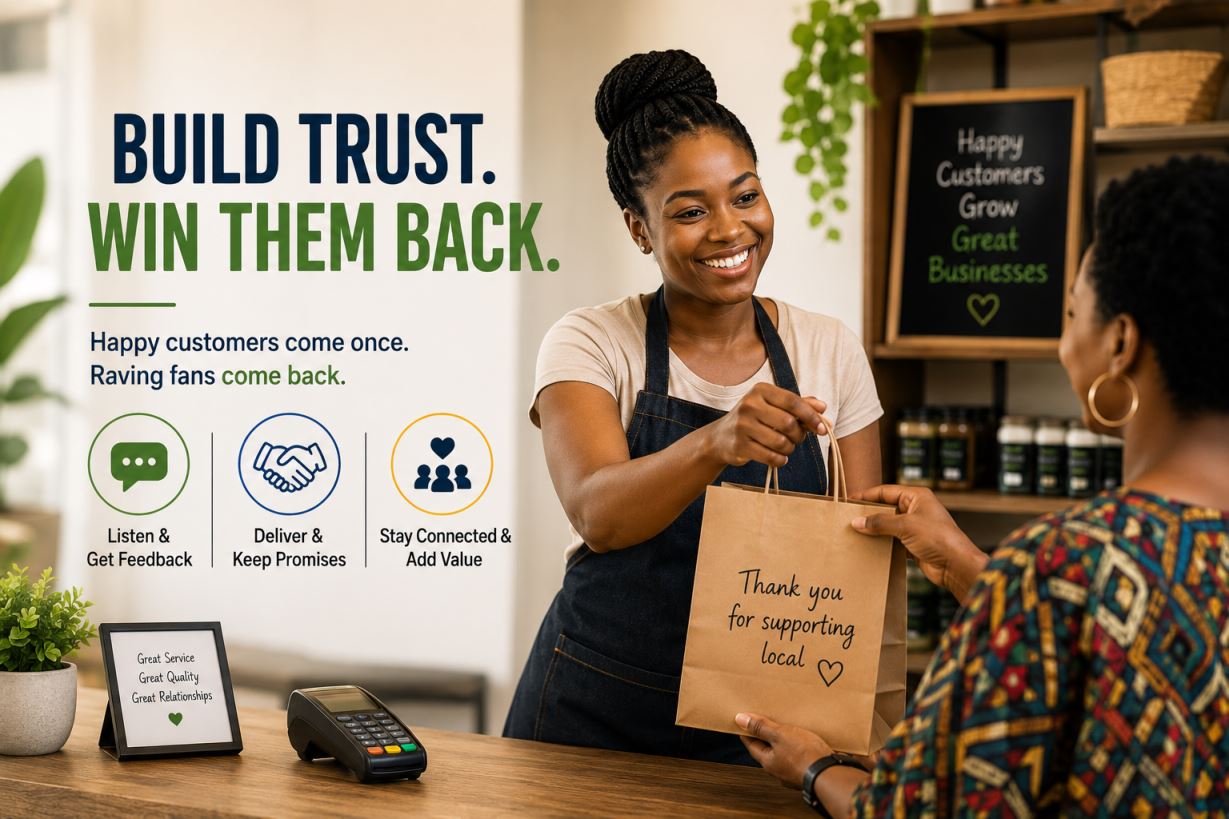
To close the gap, you must shift your mindset from transactional (making a sale) to relational (building a connection). Trust is the currency of retention.
Because Kenyan buyers rarely volunteer negative feedback, you have to actively go looking for it immediately after the service. The best way to do this? Create an anonymous feedback loop. When people know their identity is protected, they are much more likely to give you the raw, honest truth about what you need to improve.
The Kenyan SME Customer Retention Checklist
Go through these six questions to see if your business is set up to welcome customers back:
- The Immediate Feedback Loop: Do you ask for feedback right after the service or delivery, while the experience is still fresh in their mind?
- The Anonymity Option: Do you use free, simple tools (like Google Forms or a physical drop-box) that allow customers to rate your business anonymously so they can be 100% honest?
- The 24-Hour Check-In: For non-anonymous orders, do you reach out within 24–48 hours to ask, “Hi, did everything arrive okay, and are you happy with it?”
- The Delivery Guarantee: Is your delivery timeline realistic? (It is always better to promise delivery in 2 days and deliver in 1, than to promise delivery in 2 hours and deliver in 4.)
- Database Ownership: Are you keeping a record of your customers’ names, phone numbers, and what they bought (via an Excel sheet or CRM), rather than just leaving them in your social media DMs?
- The Zero-Pressure Reminder: Do you have a system to check in on old customers (e.g., sending a helpful tip, a personalized discount on their birthday, or a restock reminder) without sounding desperate for a sale?
The Bottom Line
Winning a customer back costs less than finding a new one, industry estimates on the exact multiple vary widely, from roughly 5x to 25x depending on the sector, so treat any single number with caution. What’s consistent across the research is the direction: retention is cheaper than acquisition, and most of your unhappy customers will never tell you they’re unhappy, they’ll just stop buying. Don’t let silence trick you into thinking your business is flawless. Hunt for honest feedback, protect people’s privacy when they give it, build deep trust, and watch your repeat sales grow.