

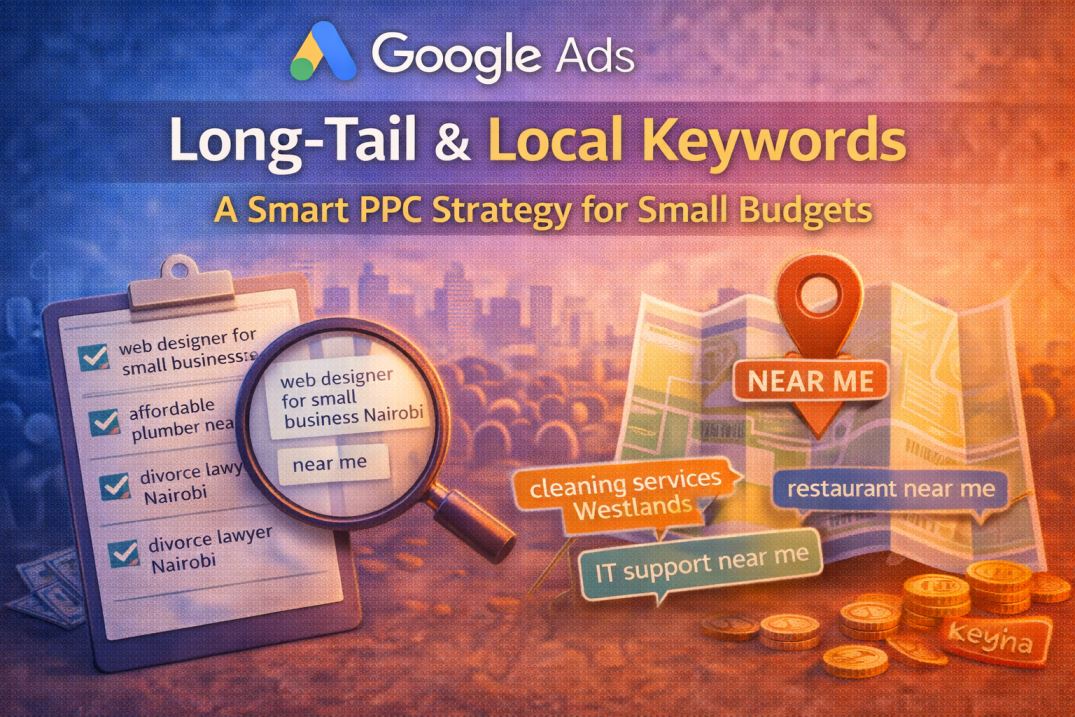
The Smart Way for Small Businesses to Compete in Google Ads
For many small and medium-sized businesses, running Google Ads can feel expensive and unpredictable. Budgets are limited, competition is strong, and large brands often dominate popular search terms.
However, there is a powerful strategy that allows smaller businesses to compete effectively without dramatically increasing ad spend: long-tail and local keywords.
Instead of targeting broad, highly competitive keywords, smart advertisers focus on more specific search phrases and local intent searches such as “near me” queries. These keywords often have lower costs, higher intent, and better conversion rates, making them especially valuable for businesses with smaller budgets.
In this article, we’ll explore what long-tail and local keywords are, why they work so well for SMEs, and how you can start using them in your Google Ads campaigns.
What Are Long-Tail Keywords?
Long-tail keywords are longer, more specific search phrases that people use when they are closer to making a decision.
For example, instead of searching:
“lawyer”
A potential client might search:
- “family lawyer in Nairobi”
- “affordable divorce lawyer Nairobi”
- “best business lawyer near me”
These longer queries are called long-tail keywords.
While each individual keyword may have lower search volume, they typically have higher purchase intent because the person searching knows exactly what they are looking for.
This makes long-tail keywords extremely valuable for businesses that want qualified leads rather than just traffic.
Why Long-Tail Keywords Are Cost-Effective
Broad keywords tend to attract a large audience, but they are also highly competitive and expensive.
For example, a broad keyword like:
“accountant”
may trigger searches from people looking for:
- accounting courses
- accounting jobs
- accounting software
- accounting definitions
As a result, businesses may pay for clicks that never convert into clients.
Long-tail keywords solve this problem by narrowing the search.
For example:
- “tax consultant for small business Nairobi”
- “bookkeeping services for SMEs Kenya”
- “KRA tax filing help Nairobi”
These searches come from people with clear intent.
When someone searches using a long-tail phrase, they are often closer to hiring a service or making a purchase, which means the likelihood of conversion is higher.
For SMEs working with limited marketing budgets, this efficiency is critical.
The Power of Local Keywords
Local keywords focus on geographic intent, meaning the search includes a location or implies one.
Examples include:
- “digital marketing agency Nairobi”
- “cleaning services Westlands”
- “plumber near me”
- “real estate agent Mombasa”
Local searches are extremely valuable because they connect businesses with customers who are actively looking for services in their area.
Search engines like Google increasingly prioritize local relevance, especially for service businesses.
When someone searches for a service, Google often assumes local intent and prioritizes businesses nearby.
For example, a search like:
“printing services near me”
signals that the user wants a local solution immediately.
This makes local keywords highly effective for businesses such as:
- consultants
- agencies
- repair services
- medical providers
- legal services
- home services
By focusing on local keywords, businesses can compete against local competitors rather than national or international brands.
Why “Near Me” Searches Matter
The popularity of “near me” searches has grown significantly in recent years due to the rise of mobile search.
When users search phrases like:
- “restaurant near me”
- “dentist near me”
- “IT support near me”
they are usually ready to act quickly.
These searches signal high commercial intent, meaning the person is actively looking for a solution.
For businesses running Google Ads, this intent translates into:
- higher conversion rates
- more qualified leads
- better return on ad spend
Even when the phrase “near me” is not explicitly included, Google often interprets searches with local intent.
For example, if someone in Nairobi searches “digital marketing consultant”, Google will prioritize results from Nairobi-based businesses.
This is why including local keywords in your campaigns can dramatically improve targeting accuracy.
How to Find Long-Tail and Local Keywords
Finding effective keywords does not require expensive tools. Several simple methods can help identify valuable search terms.
1. Use Google Keyword Planner
Google Keyword Planner is one of the most reliable tools for discovering keyword ideas.
It allows advertisers to:
- see search volume estimates
- find related keyword variations
- analyze competition levels
Start by entering your core service and location.
For example:
“website design Nairobi”
Keyword Planner will often suggest variations such as:
- “professional website designer Nairobi”
- “affordable web design Kenya”
- “small business website developer Nairobi”
These variations can become long-tail keywords for your campaigns.
2. Look at Google Autocomplete
When you start typing a search query into Google, the search bar automatically suggests popular searches.
These suggestions reflect real search behavior.
For example, typing:
- “real estate agent Nairobi”
- may reveal searches like:
- “real estate agent Nairobi for apartments”
- “real estate agent Nairobi Westlands”
- “real estate agent Nairobi property for sale”
These suggestions can inspire effective long-tail keywords.
3. Analyze Your Customer Questions
Many businesses overlook one of their most valuable keyword sources: customer conversations.
Review:
- customer emails
- WhatsApp inquiries
- phone call questions
- website contact forms
If customers repeatedly ask questions like:
- “Do you work in Kilimani?”
- “How much does website design cost in Nairobi?”
- “Can you help small businesses?”
These phrases often reflect real search intent.
Using this first-party data helps businesses align their campaigns with how customers actually search.
Structuring Long-Tail Keywords in Google Ads
Once you identify strong keywords, it is important to organize them properly.
A good approach is to group similar keywords together in specific ad groups.
For example:
Ad Group: Web Design Nairobi
Keywords:
- website design Nairobi
- web developer Nairobi
- small business website design Nairobi
Another ad group might focus on:
Ad Group: Affordable Website Design
Keywords:
- affordable web design Nairobi
- cheap website designer Nairobi
- budget website development Kenya
This structure helps Google deliver more relevant ads and better quality scores, improving overall performance.
Common Mistakes to Avoid
While long-tail and local keywords are powerful, some common mistakes can reduce their effectiveness.
These include:
- targeting too many unrelated keywords in one campaign
- ignoring location modifiers
- failing to review search term reports
- neglecting negative keywords
Successful keyword strategies require ongoing monitoring and refinement.
Reviewing your search terms regularly ensures that your ads continue reaching the right audience.
Finally
For small and medium-sized businesses, competing on broad, high-volume keywords can quickly become expensive.
Long-tail and local keywords offer a smarter alternative.
By targeting more specific searches and focusing on local intent, businesses can:
- reduce advertising costs
- attract more qualified leads
- improve conversion rates
- compete effectively with larger companies
Rather than chasing high search volume, the goal should be relevance and intent.
When your keywords match exactly what your customers are searching for, your advertising budget works harder in a more profitable way.